 Tony Pearce
“Water, water, everywhere, and not a drop to drink.” Samuel Taylor Coleridge, The Rhyme of the Ancient Mariner
While nations worry about supplies of oil and gas because of conflict in the Gulf and the closure of the Strait of Hormuz, a far more vital resource for human survival is increasingly under threat: water.
Across the world, fresh water is becoming scarce. Rivers are shrinking, reservoirs are drying up, groundwater reserves are being exhausted, and pollution is contaminating vital supplies. What was once considered an abundant resource is rapidly becoming one of the defining challenges of the twenty-first century.
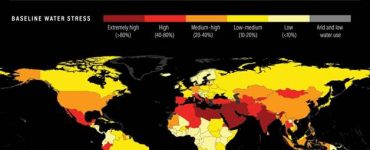
As of 2026, more than twenty-five countries face extremely high water stress. The most severe crises are concentrated in the Middle East and North Africa, where countries such as Saudi Arabia, the United Arab Emirates, Iran, Iraq, Jordan, Yemen and Libya struggle to meet growing demand. India and Pakistan also face critical shortages due to population growth and over-extraction of groundwater. In Africa, countries such as Somalia and Ethiopia, the Sahel region and parts of southern Africa are suffering from prolonged droughts intensified by climate change. Meanwhile Mexico and parts of the United States—particularly Texas and the western states—are experiencing declining groundwater levels and increasing water insecurity.
Why Is This Happening?
Several factors are driving the crisis:
- Water stress: Some countries have used more than 80% of their renewable water resources.
- Conflict and infrastructure damage: Wars in Yemen, Syria and Somalia have destroyed water systems.
- Agricultural overuse: Intensive irrigation is rapidly depleting aquifers. Once gone these aquifers cannot be restored.
- Climate change: Rising temperatures and changing rainfall patterns are worsening drought conditions worldwide.
China’s Water Challenge
China faces a severe and complex water crisis. The country suffers from water scarcity in the north, widespread pollution, and decades of over-extraction. More than 80% of groundwater supplies and large portions of rivers and lakes have been polluted by industrial waste, agricultural runoff and sewage. Water tables across the North China Plain continue to fall, while over fifty cities are experiencing land subsidence as underground water reserves are depleted. The implications for food production, economic growth and public health are profound.
The American Water Crisis
Significant parts of the United States face growing water shortages. The most affected regions include Arizona, Nevada, New Mexico, California and Texas. Reservoirs and aquifers are under pressure from prolonged drought, population growth and unsustainable consumption patterns. Parts of Louisiana and Florida have also experienced increasing water stress in recent years.
Iran: A Nation Running Dry
Iran’s water crisis has reached alarming levels. Major cities including Tehran, Mashhad and Karaj face the prospect of severe shortages as reservoirs continue to shrink. Groundwater reserves have been heavily depleted, while nineteen provinces are experiencing serious drought. Reservoirs serving Tehran have fallen to less than 10–15% of capacity. In addition, excessive groundwater extraction has caused significant land subsidence around major cities. Experts point to a combination of climate change and decades of poor water management, including inefficient agricultural practices and excessive dam construction. The situation has become so bad that Iran’s President Pezeshkian has talked of having to evacuate Tehran, a city of 13 million people, if the water fails completely.
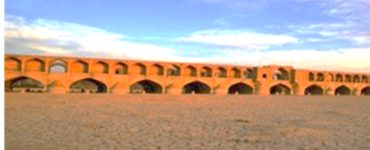
Dried up river Zayanderud in Isfahan, Iran
Water Wars: The Impact of Dams
Water shortages are not always caused by drought. Increasingly they are the result of geopolitical tensions. Iraq has been severely affected by dam construction on the Tigris and Euphrates rivers by neighbouring countries. Reduced river flow has damaged agriculture, accelerated desertification and contributed to severe dust storms.
Egypt and Sudan are concerned about the impact of Ethiopia’s Grand Renaissance Dam on the Blue Nile, which provides most of Egypt’s water supply. Further east, nations in the Mekong Basin—including Vietnam, Cambodia and Thailand—have experienced disruptions linked to extensive dam building on the upper Mekong River by China.
Israel: A Model of Water Innovation
One nation that has largely overcome chronic water shortages is Israel.
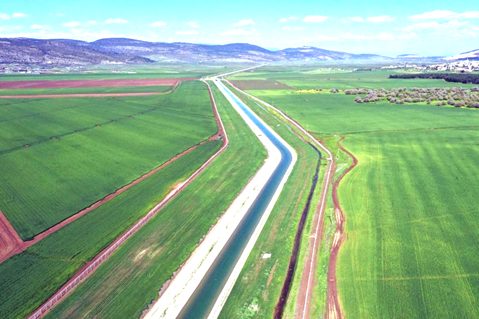
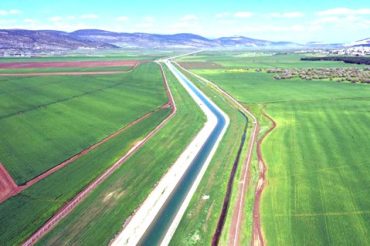
Israel has transformed water scarcity into relative abundance. The National Water Carrier, operated by Mekorot, transports water from the Sea of Galilee across the country. This was the main source of water in the early years of the state but it has now been supplemented by large-scale desalination, wastewater recycling and advanced irrigation techniques. Israel has transformed water scarcity into relative abundance. Drip irrigation technology minimises waste and maximises efficiency. Through these methods Israel has transformed the barren Negev desert into a food producing region as the ‘desert blossoms as a rose’ (Isaiah 35.1). Israel has also shared its expertise internationally, particularly in Africa, helping nations make better use of limited water resources.
What Does Bible Prophecy Say?
Without water people cannot survive. Humans can only go for about three days without water. Water shortages inevitably lead to crop failures, food shortages and famine. Jesus warned of such conditions as signs of His return: ‘And there will be famines, pestilences, and earthquakes in various places. All these are the beginning of sorrows.' Matthew 24.7-8, Revelation 6.1-8.
The Book of Revelation describes a future event affecting the world’s water supplies: ‘A third of the waters became wormwood, and many men died from the water, because it was made bitter.' Revelation 8.11.
In the context this scripture speaks of a future disaster happening during the Great Tribulation period. However modern commentators have drawn a direct correlation between this prophecy and human-made ecological disasters. Industrial and chemical pollution makes ‘water bitter’ as the contamination of water by toxic chemicals, microplastics, and industrial runoff renders water sources lethal, perfectly aligning with the imagery of ‘wormwood’.
There is also a connection between this prophecy and the Chernobyl nuclear disaster of 1986. In Ukrainian and Russian, “Chernobyl” (Чорнобиль) translates literally to a type of wormwood, specifically common mugwort or dark grass (Artemisia vulgaris). The town of Chernobyl and the nearby nuclear power plant were named after this bitter herb, which grows abundantly by the Pripyat river in the region. The Pripyat river flows directly through the heavily contaminated ‘Zone of Alienation’ where the river retains radioactive isotopes like cesium 137 and strontium 90. This river flows into the Dnieper River a vital water source for millions of people.
The Nile and the Euphrates
In Revelation 16.12 we read: ‘Then the sixth angel poured out his bowl on the great river Euphrates, and its water was dried up, so that the way of the kings from the east might be prepared.'
The Euphrates River is drying up at a critical rate. Water levels have dropped dramatically due to climate change, chronic droughts, and upstream dam construction in Turkey. The Iraqi Ministry of Water Resources has warned that the river could dry out completely by 2040 if current environmental trends continue. Agriculture in the ‘fertile crescent’ region of biblical Mesopotamia is being drastically affected by this problem.
There are also severe problems affecting the Nile (Isaiah 19:5-11). ‘The waters will fail from the sea, and the river will be wasted and dried up. The rivers will turn foul; The brooks of defence will be emptied and dried up; The reeds and rushes will wither. The papyrus reeds by the River, by the mouth of the River, and everything sown by the River, will wither, be driven away, and be no more. The fishermen also will mourn; all those will lament who cast hooks into the River, and they will languish who spread nets on the waters.'
The Nile faces a severe pollution crisis. The river is heavily contaminated by untreated municipal sewage, agricultural runoff containing toxic fertilizers, and industrial waste discharged directly into its waters. Additionally, plastic waste is overwhelming the river’s ecosystems. Studies indicate that the vast majority of fish in the Nile have ingested microplastics, and heavy metals have been found at unsafe levels in its delta branches.
The Aswan Dam on the Nile has caused severe pollution problems in the Nile. Before the dam was built, annual floods naturally deposited nutrient-rich silt onto farmlands. The dam blocks this sediment, so farmers are forced to use high volumes of artificial chemical fertilisers. The toxic runoff from these chemicals drains directly back into the Nile, polluting the water. The results affect the Nile Delta area in ways which line up exactly with this prophecy in Isaiah.
The earth defiled
Isaiah 24 presents a sobering picture of a planet suffering under the consequences of human rebellion and environmental degradation: ‘The earth is also defiled (or polluted) under its inhabitants, because they have transgressed the laws, changed the ordinance, broken the everlasting covenant. Therefore the curse has devoured the earth, and those who dwell in it and desolate. Therefore the inhabitants of the earth are burned, and few men are left.‘ Isaiah 24:5.
Hope Beyond the Crisis
The Bible points to a hopeful end for all this with the return of the Messiah and the clean up operation that will take place during His 1000 year reign on earth (see Isaiah 2.1-4, Revelation 20).
Interestingly, scientists have discovered evidence suggesting that enormous quantities of water may exist deep beneath the Earth’s surface—perhaps several times the volume of all the world’s oceans. It may be that the Lord will use this vast reservoir of water to clean up the mess humans have made of the planet God gave us to look after.
The Scripture consistently points toward a future restoration of creation at that time. Isaiah foresees a transformed world in the Messianic kingdom:
'The wilderness and the wasteland shall be glad for them, and the desert shall rejoice and blossom as the rose; For waters shall burst forth in the wilderness, and streams in the desert. The parched ground shall become a pool, and the thirsty land springs of water.' Isaiah 35.6.
Zechariah tells us ‘Living waters shall flow from Jerusalem.' Zechariah 14.8.
Ezekiel 47 describes this in more detail:
'There, along the bank of the river, were very many trees on one side and the other. Then he said to me: “This water flows toward the eastern region, goes down into the valley, and enters the sea. When it reaches the sea, its waters are healed. And it shall be that every living thing that moves, wherever the rivers go, will live. There will be a very great multitude of fish, because these waters go there; for they will be healed, and everything will live wherever the river goes. It shall be that fishermen will stand by it from En Gedi to En Eglaim; they will be places for spreading their nets. Their fish will be of the same kinds as the fish of the Great Sea, exceedingly many.' Ezekiel 47.7-10. En Gedi is on the Dead Sea, which today has no fish and no life in it, but at that time it will be restored as the Lord renews the earth.
The Bible concludes not with a dying planet, but with the promise of renewal, restoration and abundance under the rule of the Lord. All of this will be the result of God’s supernatural intervention to fix the mess humans have made of the world God gave us to look after, including the environmental crisis. All this is a reminder of both the fragility of our world, the failures of our human race and the hope to be found in God’s ultimate plan for redeemed humanity.
The living water and the Holy Spirit
Jesus also related the flowing clean water to our personal spiritual condition. Speaking on the last day of the Feast of Tabernacles He said, ‘If anyone thirsts, let him come to Me and drink. He who believes in Me, as the Scripture has said, out of his heart will flow rivers of living water.’ But this He spoke concerning the Spirit, whom those believing in Him would receive.’
Jesus’ proclamation in John 7:37-39 was a dramatic claim to be the Messiah and the ultimate fulfilment of God’s promises. By saying “out of your heart will flow rivers of living water” during the Feast of Tabernacles, He transformed a traditional Jewish ritual into a prophecy about the Holy Spirit.
During this week-long festival (also known as Sukkot), Jewish priests would march to the Pool of Siloam, draw water, and pour it over the Temple altar every day. This act celebrated God’s provision of water in the desert during the Exodus. The last day of the ritual, known as the Hoshana Rabbah, was the climax of the water-drawing celebration. Priests would draw water from the Pool of Siloam, bring it up to the Temple, and pour it over the altar alongside wine. This ritual was performed to ask God for an abundance of rain and agricultural blessing in the coming year, as well as a prayer for the future outpouring of the Holy Spirit.
By declaring that whoever believes in Him will have living water, Jesus was claiming to fulfil Old Testament prophecies (like Isaiah 55:1 and Zechariah 14:8). He was stating that He alone could satisfy humanity’s deepest spiritual thirst. The “rivers of living water” specifically symbolise the Holy Spirit. Jesus revealed that the Spirit would not just dwell with believers, but would also flow out from within them into the world.
As we see the parched conditions on earth and the spiritual barrenness of our society and our lives, we need the living water sent from God to renew, restore and revive us. Yeshua / Jesus the Messiah has come once to open the way for all of us to receive the Holy Spirit and be born again into His kingdom. He is coming again with all power from God to renew, restore and revive this sad world and make it into the place God intended it to be before it was spoiled by human sin. Make sure you have your place in this wonderful kingdom now.