Tony Pearce
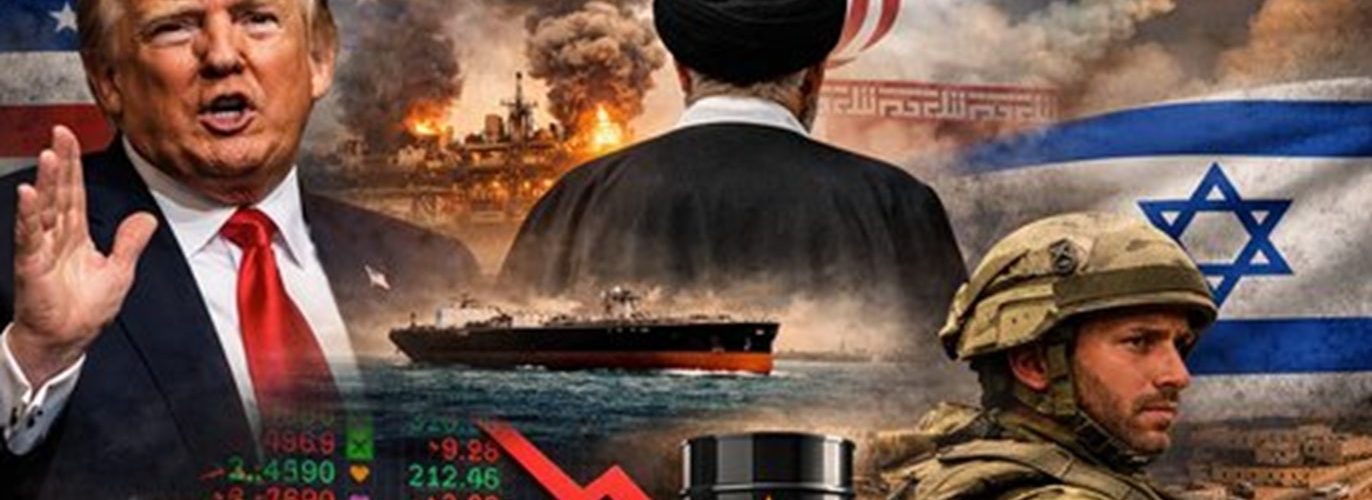
In this article we look at some of the political forces operating behind the scenes in the war in the Gulf and ask questions about where it is going. The article is written on 28 March and is accurate up to that time, but things in a war situation can change rapidly so bear that in mind as you read it. We will look at certain things that are happening that tie in with the prophecies in the Bible in relation to Persia (Iran) and Israel.
What is behind the Iranian Revolution?
The roots of the Islamic Revolution in 1979 lay in the overthrow of Iran’s Premier Mossadegh in 1953, in a coup which orchestrated by the CIA, backed by US, British and French interests who had a controlling influence in Iran’s oil shares. Following the event of 1953, Shah Reza Pahlavi ruled with the backing of the west, using Iran’s oil wealth to create a prosperous and socially liberal society. Under the Shah’s White Revolution, women gained suffrage, education, and legal rights, while Western-style fashion, mixed-gender education, and secularism were encouraged. Tehran featured a bustling nightlife, cinema, and western fashion, creating a modern, secular image, which was resented by conservative Muslim forces.
Many Muslims were quite nominal in their faith and life under the Shah was generally tolerant of religious minorities. Jews, Christians, and Zoroastrians, lived in relative peace and held prominent professional roles. Iran maintained a close, and often covert alliance with Israel, characterised by economic, military, and security cooperation, supplying Israel with oil.
Despite the social liberalisation, the Shah’s regime was politically autocratic, utilising surveillance and restricting dissent, backed by the SAVAK secret police force, which contributed to his downfall. A number of Iranians felt manipulated, exploited, and controlled by Western powers, particularly the United States and Britain, in the decades leading up to the 1979 revolution. This deep-seated resentment was a major driver of the popular uprising, with many citizens viewing the Shah as a “puppet” who prioritised Western interests over those of the Iranian people
The 1979 Iranian Revolution was supported by a broad, diverse coalition, ranging from secular leftists to religious conservatives, united in ending the Shah’s rule and Western influence. Key support came from Shia clergy, urban masses, university students, and merchants on the bazaar, all rallying under Ayatollah Khomeini’s leadership. Communists and left-wing organisations played a significant role in the 1979 Iranian Revolution’s final uprising against the Shah, but ultimately failed to gain power, becoming the targets of a brutal purge by Khomeini’s Islamic regime.
After the Revolution Khomeini imposed a strict version of Islam on Iran backed by a virulent hatred of Israel and the West. His ideology was based on an extreme form of Shiite Islam, known as ‘Twelver Shi’a Islam.’ According to this belief the 12th Imam is the final, divinely appointed leader (Imam) in a succession of twelve successors to Muhammad. They believe the 12th Imam, Muhammad al-Mahdi, was born in 869 and never died. He went into hiding in Samarra, Iraq, known as the ‘occultation’. He occasionally appears to the pious in visions and will reappear in person as the saviour figure known as the Mahdi, alongside Isa (the Muslim Jesus) to restore justice and peace to a world filled with tyranny. He will defeat one known as the Dajjal, a kind of Islamic antichrist figure.
Ayatollah Khomeini claimed that the establishment of the Islamic Republic of Iran was conducted under the guidance of the 12th Imam (Imam Mahdi). He formulated the doctrine of Velayat-e Faqih (Guardianship of the Jurist), which said that during the 12th Imam’s absence, a ‘just and pious jurist’ (himself) should rule to prepare for the return of the Imam Mahdi. This gives the Supreme Leader authority from Allah to bring to pass their new world order. Khomeini taught that they had to export this revolution, starting in the Arab world and bringing together forces that would prepare for the coming of the Mahdi.
Ayatollah Khomeini‘s concept of “exporting the Islamic Revolution” aimed to spread Iran’s 1979 theological model to other Muslim nations and the world, and ultimately unite them in a global Islamic state. He wanted to drive out western influence from the Islamic world and support “oppressed” groups trying to do this. He saw Israel as an alien influence in the Islamic world which must be destroyed and made alliances with forces in the Arab nations that agreed with this aim.
The problem they faced in the Arab Muslim world was that Iran is a majority Shi’ite country, while most of the Muslim world is majority Sunni Islam and reject the concept of ‘Twelver Shi’a Islam’. However the idea of uniting the Muslim world to remove Israel and US and western influences from the Middle East was also a motivating force in the Sunni Muslim world, particularly those influenced by Islamist groups aiming at Muslim domination through the Islamic Caliphate. Foremost among these is the Muslim Brotherhood, a radical Sunni Muslim organisation that originated in Egypt.
Iranian radicals established a foothold in many Arab countries through backing Hezbollah in Lebanon, Hamas in Gaza, and militia groups in Iraq, the Houthis in Yemen and the Assad regime in Syria. Through these they established their ‘axis of resistance’ or ‘ring of fire’ around Israel, supplying these groups with money and weapons aimed at Israel. In places like Lebanon they set up a ‘state within the state’ ruled by Hezbollah and backed by Iranian paramilitary forces. This process was extremely damaging to Arab societies, a significant source of strife and conflict to Lebanon, Syria, Yemen and Iraq. For this reason Sunni majority countries like Saudi Arabia, Jordan, the Gulf States and Egypt have resisted and opposed the Iranian influence in the region.
Israel is the main victim of Iran’s aggression, suffering bombardment with missiles from Iranian backed terrorists in Gaza, Lebanon and Yemen. On October 7th 2023 Hamas backed by Iran launched the massacre of Israelis that was the starting point of the current war. In the process of successfully fighting back against the terrorists, sadly a great deal of death and destruction came to Gaza and Lebanon, although the IDF tried to prevent as many civilian casualties as they could.
This has mobilised world wide opposition to the Jewish state. In western cities the slogan ‘From the River to the Sea Palestine shall be free’ and calls to ‘globalise the Intifada’ have become a rallying cries for the opposition to Israel. For those who understand what they are saying this is a call for the replacement of Israel with a Palestinian State from which Jews would be expelled or subject to Muslim rule, as was the original aim of the PLO according to the Palestinian Covenant.
After all that they have done in developing the land of Israel, and making it a homeland for Jewish people from around the world, Israelis do not want to be destroyed. They have taken action to defend themselves. Israelis have made the desert bloom, developed the most successful form of agriculture in barren lands the world has ever seen and exported this technology around the world, particularly benefitting countries in Africa. They have pioneered new medical techniques and hi tech advances which are beneficial to nations around the world. They have also created a powerful army, the Israel Defence Force, which has successfully fought off attempts to invade and destroy Israel on several occasions. It is a democratic society which has given human rights to all their citizens, with opportunity for full participation of Israeli Arabs in society. Arabs are in the Knesset, the judiciary and work as doctors in hospitals. There is no Apartheid as Israel’s enemies say. There are tensions in the West Bank (Judea and Samaria) and some harmful actions by Jewish settlers, as well as support for terrorism from Palestinians. These issues need to be resolved peacefully. Israel is not perfect just as other nations are not perfect.
By contrast the fruit of the Islamic regime in Iran is death and hatred, oppressing its own people and exporting terror and death to the region. They have brought a formerly prosperous country to ruin with a crumbling infrastructure and rampant inflation destroying the economy. They have wasted their wealth on supporting terror groups like Hamas and Hezbollah who have brought nothing but misery to the Arabs and terror to Israel. Many Iranian citizens have expressed opposition to the regime’s funding of foreign proxies, chanting “No to Gaza, no to Lebanon, my life for Iran.”
The main achievement of the Islamic regime has been to turn the people, especially the youth, away from Islam. Reports indicate that roughly 50,000 out of 75,000 mosques nationwide have closed as the people distance themselves from the state’s enforcement of Islamic practices. There are estimates of as many as one million Iranians turning to Jesus Christ, mostly meeting in secret in house churches.
The present crisis
The present crisis began with the announcement on 23rd November 2025 from Iran’s President Pezeshkian that the country is running out of water. Without significant rain Tehran and major cities would have to be evacuated and the population relocated. The water problem is related to climate change, with very high temperatures and low rainfall last year, but it is also the result of chronic mismanagement of water supplies by the government with the Revolutionary Guards bearing most responsibility.
They are accused of wholesale mismanagement of the situation, exploiting their political influence to implement large-scale, unsustainable projects such as dam construction, river diversion, and excessive groundwater extraction.
The economy is in crisis with the Iranian rial trading at around 1.5 million rials to the dollar, causing a collapse of business and trade. While many Iranians were facing severe economic conditions, the ruling elite have made themselves very rich. Mojtiba Khameini, current supreme leader and son of the late Ayatollah, owns properties in the most expensive part of London worth around $150 million.
This led to the uprising which began in January 2026 with protesters taking to the streets and for a while taking over major cities, calling for the end of the Islamic regime. The regime reacted with extreme violence killing as many as 30,000 people and clamping down on dissent with terror unleashed by its Bassij militia and the Revolutionary Guards (IRGC). They are a kind of religious fascist terror organisation independent of the regular army and police, enforcing the will of the Ayatollah and his henchmen.
US President Trump urged Iranian anti-government protesters to “keep protesting”, saying “help is on its way”. Israeli President Netanyahu urged Iranians to overthrow the regime. On 28 February 2026, US President Trump announced the launch of a joint US-Israeli military operation, dubbed “Epic Fury”, against Iran. The aim was to bring an end to Iran’s nuclear programme, and its mass production of missiles and to stop it supplying its proxies in the region with money and weapons aimed at Israel.
President Trump suggested in a recorded address at the outset of the operation that its broader aim is to bring about regime change in Iran. Within 24 hours, the attack had resulted in the assassination of Iranian Supreme Leader, Ali Khamenei, along with several of his senior aides, and the destruction of numerous military and security bases and installations.
On March 14th Trump claimed victory, saying he had destroyed Iran’s air force, navy, its underground missile silos and nuclear sites and decapitated much of its leadership. He is putting out terms for Iran’s unconditional surrender, with a promise to rebuild Iran and make it “economically bigger, better, and stronger than ever before” after it picked “acceptable” new leadership.
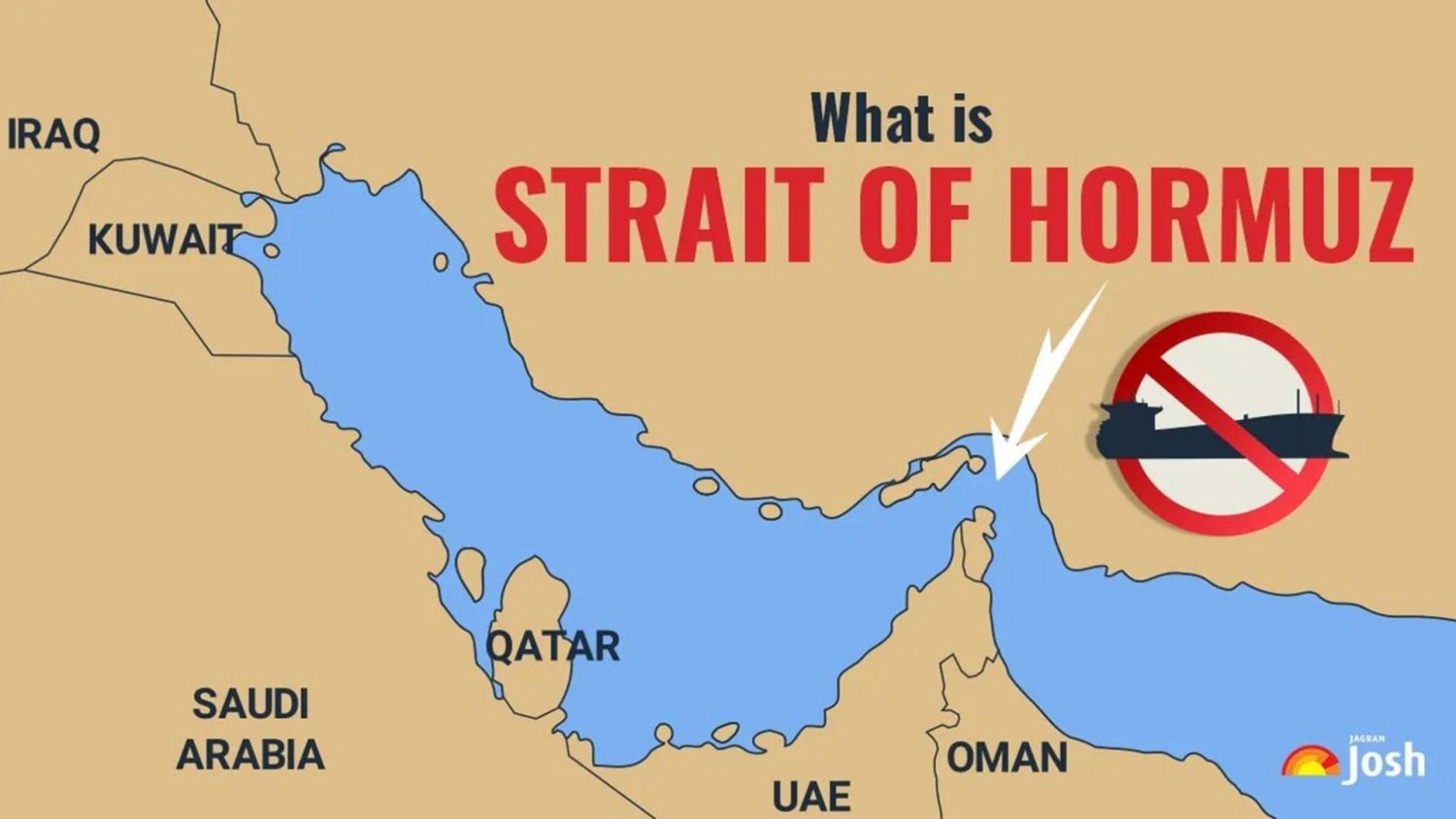
The regime rejected his terms and is fighting back with attacks on Israel and Gulf Arab states and the closure of the Strait of Hormuz. The Strait of Hormuz remains one of the world’s most important energy choke points, with roughly one-fifth of global oil passing through the narrow channel. It is not just oil and gas that are affected. One third of global fertilisers go through the strait and disruption of supply at this time that crops need to be planted will affect food supply in many nations. It will also affect supply of aluminium, helium and other materials necessary for businesses around the world, including the production of semi conductors vital for almost all hi tech items that are produced today. If the closure persists this situation will cause a global recession as energy costs go up, supply chains dry up and production of vital goods ceases,
There is a danger that if the war continues for a long time it will cause a meltdown of the world economy and worldwide conditions of social unrest and distress as the price of oil and gas increase dramatically. A news article (19/3/26) predicts what would happen if the price of oil goes up to $200 a barrel: ‘Blackouts. Economic paralysis. Empty supermarket shelves. Petrol and diesel rationing. Riots. As oil prices soar to unprecedented highs, Britain is on the brink of the worst energy crisis in our history. The International energy agency has already described it as the worst ever crisis to hit the oil market. Experts across the political spectrum are warning this is just the beginning. Oil is the lifeblood of the global economy. If it stops flowing, the inevitable effect is no different from what happens to the human body when it haemorrhages, dizziness, collapse, cardiac arrest and death. … We have worked on the basis that the government will be able to maintain some sort of control throughout. In reality even that assumption might be too optimistic. Unless politicians can keep a grip the chaos ahead could be too appalling to contemplate.’
The House on the Sand
Of course you could question how wise it is to make oil the lifeblood of the world economy. Back in 2004 I wrote a book ‘The House built on the sand’ (now out of print, but available online), linking the present world situation to Bible’s prophecies of a great crisis that will come at the end of this age. The first chapter reads as follows.
”But you, Daniel, shut up the words, and seal the book until the time of the end; many shall run to and fro and knowledge shall increase.” Daniel 12.4.
The prophecies of Daniel written some 2500 years ago contain information about the ‘time of the end’, the final period before the event known in the Old Testament as the Day of the Lord and in the New Testament as the Second Coming of Christ. We are all witnesses of the fulfilment of these words of Daniel as we see a huge increase in travel shrinking the world to a global village and the incredible developments of technology in our time, filling our shops and our homes with gadgets and machines that our forefathers had absolutely no concept of.
Two hundred years ago, before the railways came, the fastest anyone could go anywhere in the world was the speed of a horse. The fastest you could send a message anywhere in the world was to give it to someone to carry it from A to B at the speed of a horse. It was the same in the time of Julius Caesar, Alexander the Great and back as far as we can look into history.
Today you can get to other side of the world by jet plane in just over a day, you can speak by phone or communicate by email instantly with someone thousands of miles away. Technology is advancing so fast that today’s most advanced computers, mobile phones and a host of other gadgets will be out of date within a few years, if not months. Switch on a computer and open up the Internet and you can tap into an almost infinite source of knowledge on whatever you want to know.
Two hundred years ago as two thousand years ago the majority of people never travelled far from the place they were born, and had little or no idea of other cultures and ideas. Most white people living in Europe had never seen a black person and most black people living in Africa had never seen a white person.
Today travel and communications mean that the world has become a global village and people of all races share living space, ideas, entertainment, sport, music and religion in a way our forefathers could never have imagined.
Two hundred years ago as two thousand years ago if you wanted to build, grow food, go to war or travel, you needed the sweat of human labour with the help of animals like the ox, the horse, the donkey and the camel to accomplish these things.
Today the discovery of coal, oil, gas and nuclear power, means that machines will do the back breaking jobs that our ancestors had to do by human sweat with the help of animals. Trains, cars and planes will transport us in hours to places that previously it would have taken weeks, months or even years to get to.
All these developments open up many exciting possibilities which our ancestors could only have dreamed about. But there is a downside. Although the labours of the past were much harder and only capable of accomplishing a fraction of what modern machines can do, they had two great advantages. They had no negative impact on the environment. They were entirely renewable. People came and went, animals were strong for a while and then died, but whether they were in Europe or China or anywhere else people and animals were able to reproduce and provide for the next generation to carry on living in the same way as their ancestors had done. They planted seeds from the previous year for the next year’s crops, depending on the sun and the rain coming and the cycle of seasons which did not change from year to year. Apart from deserts and high mountains, the basic resources for keeping society going were available wherever you lived in the world.
Today the resources needed to keep our wonderful world going are finite. They are found only in certain places, some of them, especially Middle Eastern oil, in very vulnerable places which right now are passing through a period of instability which could plunge the whole world into sudden chaos.’
The basic theme of my book was that creating a world system dependent on oil is building a house on the sand. The question is what happens when the oil and gas that are needed to keep the system going runs out? The title is based on Jesus’ words in the Sermon on the Mount.
Jesus said: ‘Whoever hears these sayings of mine and does them, I will liken him to a wise man who built his house upon the rock; and the wind descended, the floods came, and the winds blew and beat on that house; and it did not fall, for it was founded on the rock. But everyone who hears these sayings of mine and does not do them, will be like a foolish man who built his house on the sand; and the rain descended and the floods came and the winds blew and beat on that house; and it fell. And great was its fall.’ Jesus speaking in Matthew 7.24-27.’
The Coming Storm
I wrote that over 20 years ago. Now we see the storm coming. Prophecy teacher Britt Gillette said, ‘We are watching nothing less than an unfolding catastrophe in the Middle East with life altering consequences for everyone on the planet.’ Even if the war stops in the next week or two certain things have been set in motion, some of which are potentially irreversible. These things also connect to Bible prophecy.
1) There will be a general state of wars and conflicts in the last days (Matthew 24.7-8). ‘For nation will rise against nation, and kingdom against kingdom and there will be famines, pestilences, and earthquakes in various places. All these are the beginning of sorrows.’ The phrase ‘nation against nation’ implies wars within nations (Greek word ethnos from which we have ethnic), over race or religion or warring factions fighting for power within nations. Much of Africa has been plagued with such wars, the worst of which is the Sudan war which has resulted in around 400,000 killed and nearly 25 million affected by famine. ‘Kingdom against kingdom’ implies blocks of nations in conflict. The Iran war is part of the global conflict between nations led by western democracies, USA, and allies around the world, and the opposing force of dictatorships like Russia, China and Iran. This war also has an economic aspect in the Russia – China BRICS alliance challenging US economic supremacy.
2) This state of general conflict will lead into the great tribulation period, when the four horsemen of the apocalypse will ride out (Revelation 6). This will bring the Antichrist ‘conquering and to conquer’, followed by war, famine and death. The last battle, Armageddon, will be fought over Jerusalem and will end with the physical return of Jesus Christ (Zechariah 14, Revelation 16 and 19). Jesus will then set up the Messianic kingdom or Millennium, bringing an end to war and injustice (Isaiah 2, Revelation 20).
3) Sensing a coming economic crisis, globalists are working on a new financial system that will involve using AI backed Digital IDs linked to Central Bank Digital Currencies that will monitor every financial transaction people make and block any people who get out of line. Something along these lines is already operational in China’s Credit Score system. This connects to the prophecy of Revelation 13, the famous 666 Mark of the Beast system which will control people’s ability to buy and sell (Revelation 13). In the end this system will collapse as prophesied in Revelation 18, the fall of Babylon the Great the world trading system.
4) The scriptures also speak of environmental disaster in the last days. Aspects of this include fish dying in the sea, ships being destroyed and waters become undrinkable. Revelation 8.8-9. At the centre of this war is the control and use of oil and gas. Oil is a major polluter of the environment. Environmental organisations have described the current situation, with numerous tankers trapped in the region, as an “ecological ticking time bomb,” where an attack or sinking could result in catastrophic, long-lasting damage to the marine ecosystems. Destroying oil fields and installations also contribute to this disaster.
Already Iran has hit the desalination plant in Bahrein damaging the water supply for the country. The countries around the Gulf rely on desalinated water for their drinking water. Without water, no matter how much money and oil these places have, people won’t be able to live there. Iran too is facing a water crisis which has no long term solution and could cause its major cities to become uninhabitable. The Euphrates River that flows through Iraq and Syria is also drying up (Revelation 16).
5) The Bible prophesies the return of the Jewish people to the land of Israel in the latter days and a time of conflict over their status there leading to the last battle and the return of the Messiah to the earth (second coming of Jesus Christ). See Ezekiel 36-38, Zechariah 12-14, Luke 21.24-28. While much of the world is blaming Israel for the crisis in the Middle East, including the war in Gaza and Lebanon, the fact is that all of Israel’s wars going back to the War of Independence in 1948 happen because Israel’s enemies attack with the intention of destroying the Jewish state. Israel is involved in the present war because of Iran’s threat to destroy the state of Israel and its supply of missiles to Israel’s enemies.
There are two potential results of this war from Israel’s point of view. The Islamic regime’s power is broken and a government comes in which drops the death to Israel theme and allows peace plan for Israel to go forward, leading to the seven year covenant of Daniel 9.27. Or the regime is battered but not broken and then joins together with the enemies of Israel in the War of Gog and Magog (Ezekiel 38-39) seeking the destruction of Israel. However whatever the future holds Jeremiah 31.35-36 says ‘Thus says the Lord, if the sun moon and stars cease to give light, then shall Israel cease to be a nation before Me forever’ (abbreviated).
6) Jeremiah 49.34-39 refers to Elam, the ancient biblical name for the western part of Iran. Scholars point to a historic fulfilment of this prophecy in the days of the Assyrian Empire. However there remains a possible future fulfilment in last days events when God will break ‘the bow of Elam’. The bow is an image used in scripture for military might. In modern terms it could be seen as a picture of missiles and their launchers which are now being destroyed. Verse 36 speaks of the ‘outcasts of Elam’ being scattered abroad. Around four million Iranians have already left Iran and more are trying to get out now. Verse 37 speaks of disaster coming on its leaders: ‘My fierce anger says the LORD.’ God has good reason to be angry with the leaders of the Islamic regime, whose hatred of Israel and arming of its adversaries is responsible for much of the recent conflict in the region. They have persecuted Christians, while promoting a false religious system. In verse 38-9 the Lord promises to set up ‘My throne in Elam’ and bring back its captives, a reference either to some kind of Christian revival in Iran in the last days, or its restoration in the Millennial kingdom.
7) Jesus warned about an increase in false prophets and false christs in the last days. See Matthew 24.5 and 24.24. If you refer back to the origin of Khomeini’s Islamic Revolution which we have already looked at in this article it is clearly based on a false prophecy, under the influence of spiritual deception as prophesied for the time of the Antichrist in 2 Thessalonians 2: ‘And for this reason God will send them strong delusion, that they should believe the lie, that they all may be condemned who did not believe the truth but had pleasure in unrighteousness.’
The Prince of Persia
Behind all this we see evil spiritual forces at work. This takes us to another prophetic theme, to be found in the Book of Daniel. The prophet Daniel has a visitation from an angel who tells him about ‘the prince of Persia’:
‘Then he said to me, “Do not fear, Daniel, for from the first day that you set your heart to understand, and to humble yourself before your God, your words were heard; and I have come because of your words. But the prince of the kingdom of Persia withstood me twenty-one days; and behold, Michael, one of the chief princes, came to help me, for I had been left alone there with the kings of Persia. Now I have come to make you understand what will happen to your people in the latter days, for the vision refers to many days yet to come.” … “Do you know why I have come to you? And now I must return to fight with the prince of Persia; and when I have gone forth, indeed the prince of Greece will come. But I will tell you what is noted in the Scripture of Truth. (No one upholds me against these, except Michael your prince).’ Daniel 10.12-14, 20-21.
In Daniel 10, the “prince of Persia” is not a human king but a high-ranking, evil spiritual entity under Satan’s power. This fallen angel held spiritual authority over Persia, opposing God’s messenger (an angel) for 21 days until the archangel Michael intervened. This passage indicates that there are supernatural powers operating in the heavenly realms and influencing what happens to nations on earth.
The book of Daniel also contains remarkable prophecies how God reveals things to come in events on earth. Such prophecies are found in the Hebrew books of Isaiah, Jeremiah, Ezekiel and Zechariah. These predicted accurately the Babylonian conquest of Jerusalem and captivity of the Jews to Babylon in 597-586 BC (Jeremiah 25.9-11, Isaiah 39.6-7, Ezekiel 24.1-2); the fall of Babylon to the Medes and Persians and the restoration of the Jews to Jerusalem under the edict of the Persian king Cyrus in 537 BC (Isaiah 44.26-45, Jeremiah 51-52, Ezra 1); the Greek conquest of Persia under Alexander the Great and its subsequent division into four parts in 334-330 BC (Daniel 8.1-22, 11.1-4); the Seleucid wars with Judah and the revolt of the Maccabees in 167-165 BC (Daniel 11).
So detailed are these prophecies and so exactly fulfilled by identifiable events in history that modern theologians say they must have been written after the event around 165 BC. Conservative scholars say that Daniel was written by the prophet who lived in Babylon in the sixth century BC recording his visions and experiences during the Babylonian exile and giving revelation sent by God of things to come, which is the view I hold.
The prophecies in Daniel concerning the wars of Babylon, Persia and Greece focus on how these great empires relate to Israel / Judah and the Jewish people. They also contain prophecies of events to come at the end of days concerning the emergence of the sinister figure of the Antichrist, more about whom would be revealed in the New Testament (2 Thessalonians 2, Revelation 13 and 17). Daniel 7.23-27 is a clear reference to this figure, describing him as the ‘little horn’ who speaks ‘pompous words against the Most High and persecutes the saints of the Most High’.
This one will appear in the last days before the return of the Messiah, at a time of great wickedness on earth. “And in the latter time of their kingdom, when the transgressors have reached their fullness, a king shall arise, having fierce features, who understands sinister schemes. His power shall be mighty, but not by his own power; he shall destroy fearfully, and shall prosper and thrive; he shall destroy the mighty, and also the holy people. Through his cunning he shall cause deceit to prosper under his rule; and he shall exalt himself in his heart. He shall destroy many in their prosperity. He shall even rise against the Prince of princes; but he shall be broken without human means. And the vision of the evenings and mornings which was told is true; therefore seal up the vision, for it refers to many days in the future.” Daniel 8.23-26.
Chapter 11 prophesies the reign of Antiochus Epiphanes who persecuted the Jews in the days of the Maccabees. In the later part of this chapter it moves on to prophesy the coming Antichrist:
‘Then the king shall do according to his own will: he shall exalt and magnify himself above every god, shall speak blasphemies against the God of gods, and shall prosper till the wrath has been accomplished; for what has been determined shall be done. He shall regard neither the God of his fathers nor the desire of women, nor regard any god; for he shall exalt himself above them all.’ Daniel 11.36-39.
This leads to the final time of the great tribulation described in Daniel 12:
“At that time Michael shall stand up, the great prince who stands watch over the sons of your people; and there shall be a time of trouble, such as never was since there was a nation, even to that time. And at that time your people shall be delivered, every one who is found written in the book. And many of those who sleep in the dust of the earth shall awake, some to everlasting life, some to shame and everlasting contempt. Those who are wise shall shine like the brightness of the firmament, and those who turn many to righteousness like the stars forever and ever. But you, Daniel, shut up the words, and seal the book until the time of the end; many shall run to and fro, and knowledge shall increase.”
The events here tie in with other passages in the Bible dealing with the final period of the great tribulation, notably Matthew 24.15-31 and Jeremiah 30. There is also a reference in Revelation 12 to a war in heaven between Michael and the devil which results in the devil being thrown down to earth. This is similar to the passage we have looked at about the Prince of Persia in Daniel 10 with its revelation of spiritual powers at work behind earthly conflicts. The book of Revelation opens the veil on the evil spiritual forces working behind the scenes in the events of the apocalypse:
‘And the dragon was enraged with the woman, and he went to make war with the rest of her offspring, who keep the commandments of God and have the testimony of Jesus Christ.’ Revelation 12.17.
One view of this chapter is that the woman here is Israel, in which case this is describing the end time war on Israel and the Jews (those who keep the commandments of God) and the Christians who ‘have the testimony of Jesus Christ.’ Interestingly the two forces that are most vocal in their opposition to Israel today are the Islamists and the far left, the so called red-green alliance. These two groups are powerful forces of antichrist in the world today, coming against biblical Christianity and campaigning to globalise the Intifada with a view to destroying Israel.
Is there a connection between the ‘Prince of Persia’, and the last days conflict shaping up in our time?
Daniel’s prophecies move from the near future from his point of view to the distant future, to events which line up with the things happening now in our time.
The near future events from Daniel’s point of view relate to the wars of the Greeks and the Persians. This brought into conflict Greece, the most developed European nation with Persia, the most developed nation of Asia. Alexander brought Greek ideas and culture into the lands that he conquered and conversely the Persians introduced theirs to Greece. Both Greeks and Persians had an influence on Israel and the Bible. This was partly for good. The Persian King Cyrus’ reforms blessed Israel and caused its restoration. The Septuagint translation of the Hebrew Bible into Greek and the expansion of koine Greek as a common language led to the New Testament being written in the Greek language which helped its spread in the early days of Christianity. It was partly for evil. Haman in the Persian empire and Antiochus in the Greek empire both sought to destroy the Jews and were defeated by God’s intervention. Iran is now in the hands of a Haman lookalike that has taken over and ruined the cultured Persian nation and replaced it with a murderous dictatorship backed by a false religious system.
The present situation has brought into conflict America, the most developed nation in the western world with the Islamic Republic of Iran. America is backing Israel and Iran wants to destroy Israel. Israeli PM Netanyahu is hoping that out of this war the current Islamic regime will fall and be replaced by a more reasonable government that will drop the ‘death to Israel’ programme and work for peace in the region.
This could happen if the widespread popular resistance to the Islamic regime succeeds in overthrowing the regime. If Iran’s regular army, the Artesh, who are not part of the IRGC, join with the people against the regime that is possible. Such a change would also be a big step forward towards a successful outcome for Trump’s Peace plan for Israel and the Palestinians, removing Iran’s Islamic regime as the biggest spoiler of peace. In this case we could really be moving towards the seven year covenant of Daniel 9.27.
On the other hand the rulers of Iran are not backing down. They are looking for vengeance not peace. A negative outcome of the war from Israel’s point of view, could be leaving the regime in place, and a weakening of America and the western alliance. This would strengthen the anti American coalition, bringing together an alliance of countries (including Turkey, Russia, Persia and other Islamic allies) in the War of Gog and Magog (Ezekiel 38-39) with the aim of destroying Israel. This war is prophesied in the Bible for the last days of this age after the regathering of Israel from world wide dispersion. It brings God directly into the battle as He destroys the armies coming against Israel. The fact that Persia is included in the line up (Ezekiel 38.5) is an indicator that it will remain an adversary to Israel in the coming days.
What do you think? Are we on the edge of the final time of tribulation? Will the Antichrist arise out of this conflict? Will America emerge triumphant reshaping the world order or fall under the weight of contrary events? Will there be a peace settlement for Israel or progress towards the last days’ war?
One thing we can say for sure is that Jesus is coming. He warned us that we would see such things happening in the last days before He returns. He said that at a time when Jerusalem is centre state of world events there will be a situation of world wide distress on earth.
“And there will be signs in the sun, in the moon, and in the stars; and on the earth distress of nations, with perplexity, the sea and the waves roaring; men’s hearts failing them from fear and the expectation of those things which are coming on the earth, for the powers of the heavens will be shaken. Then they will see the Son of Man coming in a cloud with power and great glory. Now when these things begin to happen, look up and lift up your heads, because your redemption draws near.” Luke 21.25-28.
The distress of nations with perplexity literally means a crisis with no way out. The whole Middle East situation has created a world crisis with no way out and the present event in the Gulf is fuelling that crisis even more. At this time people in the world will be suffering heart failure as the see fearful things coming on the world. The people who know Jesus as Saviour will have a future and a hope as we look to the soon coming return of the Saviour, the Lord Jesus Christ.
Maranatha. Come Lord Jesus.